
Tim Walz Has Hit the Wall
Riots, fraud and economic stagnation—Minnesota has had it rough. Brighter skies could be ahead.

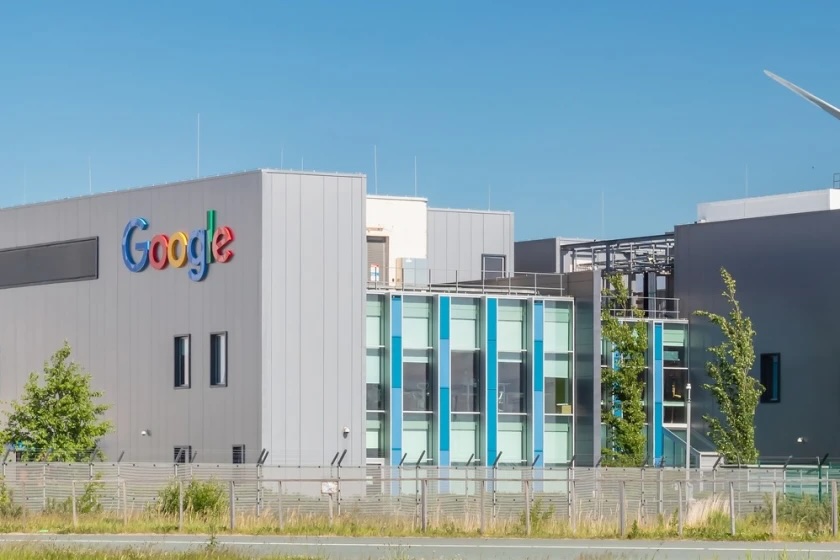
The now-reflexive hostility of hard-left elements of the environmental lobby to any data-center development is having serious repercussions for our state.
By Mitchell Williamson
July 30, 2026
Duluth News Tribune
In 1977, the beloved sitcom “Happy Days” aired an episode in which Arthur “Fonzie” Fonzarelli, wearing swim trunks and his trademark leather jacket, jumped over a shark on water skis. The scene was so absurd and so emblematic of a show that had run out of good ideas that “jumping the shark” became cultural shorthand for a moment when something loses the plot.
Minnesota’s progressive environmental lobby has now had its own “jumping the shark” moment. By rushing to court to block the “Project Skyway” data center in the city of Pine Island, the Minnesota Center for Environmental Advocacy crossed from environmental watchdog to reflexive obstructionist. Led by CEO Kathryn Hoffman, the MCEA is opposing the very kind of modern, high-value, technology-driven project Minnesota should be trying to attract.
That is bad for Pine Island and bad for Minnesota.
In a statement, the MCEA noted that its Pine Island suit was the fourth lawsuit it had filed in just two months against data-center proposals in Minnesota. The pattern is continuing in Northeastern Minnesota, where the MCEA is also suing over the proposed data center in Hermantown.
This isn’t an isolated dispute over one project or one community; clearly, it’s part of a broader strategy to challenge data-center development wherever it appears. This isn’t harmless advocacy. It is a strategy with real victims: local workers who lose construction jobs, suppliers left in limbo, a city missing out on new tax revenue, and a community whose elected representatives voted for the project.
It also sends a clear message to any company considering Minnesota: Even if you go through a lengthy public process, win broad community support, pair your project with clean energy, and agree to strong ratepayer protections, you should still expect to be hauled into court.
At some point, one has to ask whether this is really about the environment or about MCEA’s business model. Lawsuits generate headlines. Headlines generate donations. Donations keep the organization running.
Not every lawsuit is frivolous or purely mercenary, but when an advocacy group’s answer to project after project is “see you in court,” Minnesotans are entitled to question whether the goal is better environmental outcomes or better fundraising results.
The Pine Island fight is especially telling because the project has drawn praise from people no one would mistake for anti-environment conservatives. Jennifer Granholm, Joe Biden’s secretary of Energy and a former Democratic governor of Michigan, publicly applauded the Minnesota approach. She urged other states to “take note,” calling it a model for data-center siting, thanks to its ratepayer protections, clean-energy commitments, and Google’s shouldering of costs.
As represented by this project and data center projects in Minnesota broadly, the now-reflexive hostility of hard-left elements of the environmental lobby to any data-center development is having serious repercussions for our state.
The Pine Island project is not some 1970s smokestack plant being smuggled into town under cover of darkness. After 14 public forums where residents could ask questions and voice concerns, the project earned unanimous approval from both the City Council and Planning Commission — elected officials chosen by their neighbors to make exactly these kinds of decisions.
This data center, developed in partnership with Google, would support the everyday digital services Minnesotans rely on: search, YouTube, cloud computing, and artificial intelligence. What is distinctive about the project is its energy plans. According to Xcel Energy, the project would add 1,900 megawatts of new clean energy to the grid, including 1,400 megawatts of wind, 200 megawatts of solar, and 300 megawatts of long-duration battery storage — all paid for by Google. No costs get shifted to Minnesota ratepayers. Google would cover its full electricity use and the new grid infrastructure it requires.
This is precisely the sort of model environmental groups should want to help shape: private capital driving clean-energy expansion, strong ratepayer protections, new tax revenue for the community, and construction jobs. Instead, the MCEA sued to stop it and obtained a temporary restraining order.
To be clear, environmental review matters; and questions about water use, power demand, backup generators, noise, and local infrastructure are legitimate. Communities deserve straight answers, developers should meet high standards, and utilities and public officials have a duty to protect residents and taxpayers. But there is a difference between demanding answers and frivolous litigation to stop development of any kind.
Minnesota simply can’t afford to sit this one out. The data-center economy is now central to digital services, artificial intelligence, advanced manufacturing, next-generation healthcare, and modern research. These facilities are the backbone of the digital economy and a platform for innovation, jobs, and cleaner energy infrastructure. If we earn a reputation as the state where promising next-generation projects go to die in court, the jobs and investment of tomorrow will simply go elsewhere.
Minnesota’s future doesn’t have to be an either-or choice between economic growth and environmental stewardship. The Pine Island project shows the possibility of both. That’s why the MCEA’s lawsuit is so misguided. It risks killing a promising model that could position Minnesota as a national leader in responsible data-center development.
Fonzie’s jump over the shark was funny because it was ridiculous. The MCEA’s version isn’t funny; it’s costly, self-defeating, and seriously dangerous for all of us.
Minnesota should build the future — not sue it into oblivion.
Mitchell Williamson is a vice president of the Minnetonka-based Minnesota Private Business Council (growthmn.com). He wrote this exclusively for the News Tribune.
Riots, fraud and economic stagnation—Minnesota has had it rough. Brighter skies could be ahead.
The voices of Minnesota’s employers and taxpayers are being overwhelmed by coastal billionaires and powerful unions.

The now-reflexive hostility of hard-left elements of the environmental lobby to any data-center development is having serious repercussions for our state.

On our country’s 250th birthday, let’s focus on confidence instead of self-contempt.

She is portraying herself as a moderate, but so did Walz before he was elected and then governed from the hard left.

Minnesota’s founders included the single-subject rule for a reason: to prevent exactly this kind of legislative logrolling, where unrelated policies are crammed into one massive bill.